From the Blog
Decomposition Stains: Can Floors, Subfloors and Mattresses Be Saved?
Hard, sealed surfaces such as tile, sealed concrete and metal can usually be cleaned and disinfected after a death. Carpet, carpet pad, mattresses and upholstered furniture almost always have to be removed, and the subfloor often does too, because decomposition fluids soak through and keep releasing odor and bacteria.
Knowing what can be saved helps families and landlords plan, talk to insurance and avoid paying twice. This guide explains what decomposition stains are, how far they travel, and how professionals confirm a home is truly clean after unattended death cleanup.
What Causes Decomposition Stains?
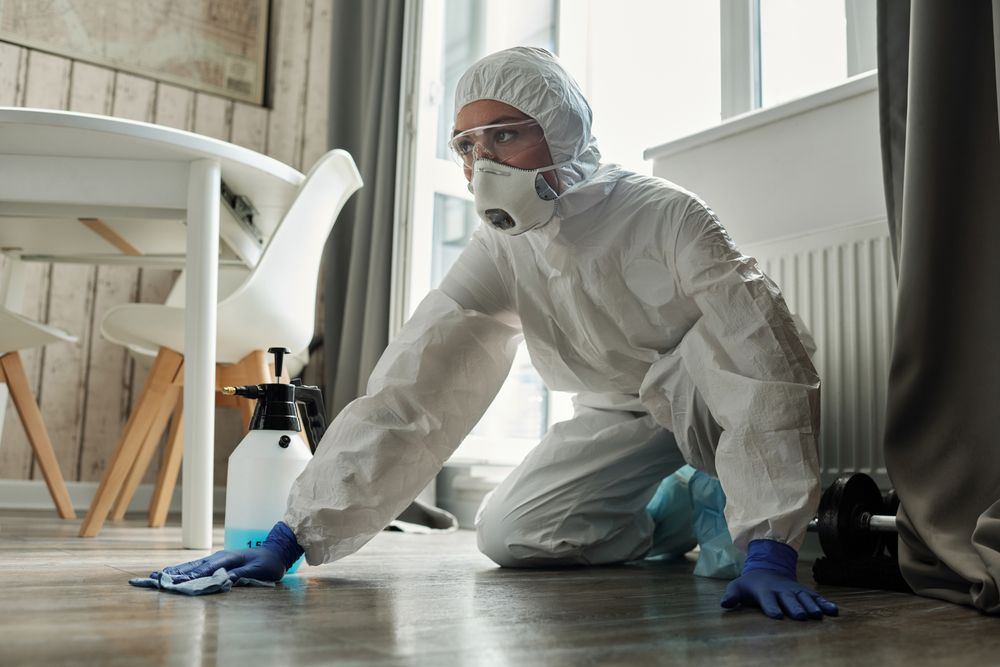
After death, the body's natural breakdown releases fluids that contain blood, bacteria and other organic material. When a death goes unnoticed for days, those fluids leave the body and seep into whatever is underneath. The result is a dark stain, a strong odor, and contamination that usually reaches far deeper than the visible mark. Old stains are not safe just because they are dry: hepatitis B can survive in dried blood for at least seven days, according to the CDC.
What Can Be Saved and What Must Go
| Material | Usually salvageable? | Why |
|---|---|---|
| Ceramic or porcelain tile | Yes | Non-porous; can be disinfected (grout may need replacing) |
| Sealed concrete | Often | Can be cleaned and sealed if fluids didn't penetrate cracks |
| Metal and glass | Yes | Non-porous |
| Hardwood floors | Sometimes | Fluids can seep between boards and into the wood |
| Vinyl or laminate | Rarely | Fluids get under seams to the subfloor |
| Carpet and carpet pad | No | Absorb fluids and odor completely |
| Subfloor (plywood or OSB) | Sometimes | Lightly affected areas can be cleaned and sealed; soaked areas are cut out |
| Mattresses and box springs | No | Can't be disinfected through the core |
| Upholstered furniture | No | Fluids reach the foam and frame |
| Drywall near the stain | Sometimes | Removed if fluids wicked up or odor remains |
| Clothing and bedding in contact | No | Disposed of as biohazard waste |
Stains or Odor After a Death? Call (918) 478-8596. Our Crew Is Dispatched Immediately.
How Far Decomposition Fluids Travel
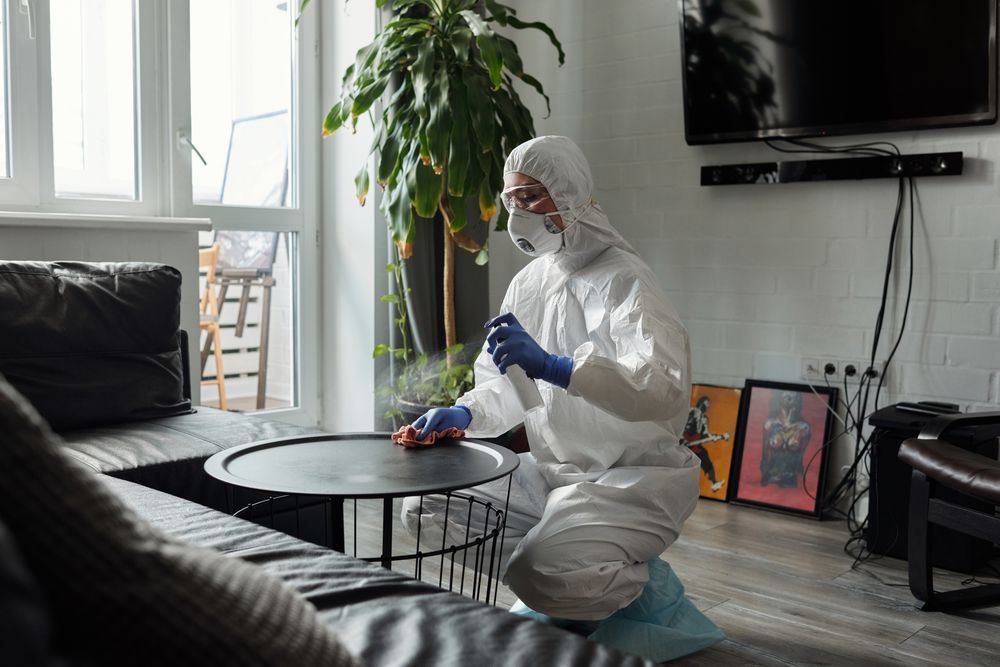
What you see on the surface is the smallest part of the stain. Fluids usually travel in this order:
- Surface material: bedding, a mattress or carpet
- Padding: carpet pad soaks up much more than the carpet above it
- Subfloor: plywood or OSB absorbs fluid and odor
- Floor joists and framing: in long-delayed discoveries, fluids reach the structure
- Rooms below: in multi-story homes and apartments, ceilings beneath can be affected
That is why professionals cut back past the visible stain, checking each layer until they reach clean material.
Decomposition and Mold Growth
Decomposition fluids add moisture and organic material to flooring and walls, and closed, warm homes give mold what it needs to grow. Mold can appear around a decomposition site within days, especially in humid Oklahoma summers. Removing the wet, contaminated materials quickly is the best way to prevent it. If mold has already spread, it needs to be addressed as part of the cleanup.
Signs of Hidden Contamination After a Death
- Odor that returns on hot or humid days
- A soft or discolored spot in the floor near where the person was found
- Staining on baseboards or the bottom of drywall
- Insects returning to the same area
- Stains or odor on the ceiling of the room below
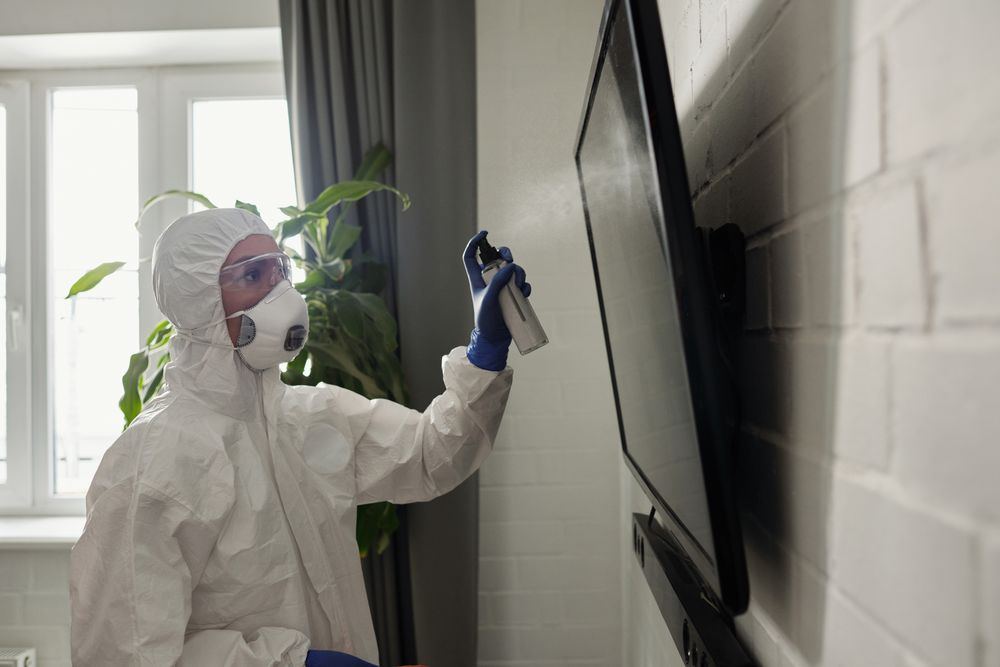
If you notice any of these after a home was "cleaned," contamination was likely left behind. Odor is the most common clue, and our guide on how long it takes a dead body to smell explains why it lingers.
How Professionals Confirm a Surface Is Clean
A trustworthy crew doesn't stop when things look clean. They:
- Remove every porous material the fluids reached.
- Clean and disinfect the remaining surfaces with hospital-grade products for the full contact time.
- Test surfaces, often with an ATP meter, which measures organic residue that the eye can't see.
- Seal cleaned subfloor and framing with an odor-blocking encapsulant before new flooring goes down.
- Treat the air and HVAC system to remove lingering odor.
- Check again for odor before handing the home back.
When fluids soak into flooring, the work overlaps with blood and bodily fluid cleanup, and both follow the same safety rules, including disinfectants registered with the EPA.
Can You Clean Decomposition Stains Yourself?
We don't recommend it. Bodily fluids can carry bloodborne pathogens covered by OSHA's bloodborne pathogens standard, contaminated materials must be disposed of as biohazard waste, and DIY cleaning usually treats only the surface. Enzyme cleaners and carpet shampoo may lighten the stain, but the contamination underneath stays and the odor returns.
Help Across Tulsa and Nearby Cities
Our biohazard cleanup company in Tulsa helps families, landlords and estate executors in Tulsa, Broken Arrow, Owasso, Bixby, Jenks, Glenpool and nearby areas restore homes after a death, with written documentation for insurance. Once the home is safe, we can also handle an estate cleanout.
Frequently Asked Questions
They can lighten surface stains on some hard materials, but they can't reach fluids in carpet pad, subfloor or mattresses. The odor usually returns.
Stains or odor that keep coming back? Our crew is dispatched immediately across the Tulsa area to remove contaminated materials, disinfect, seal and confirm the home is clean.
Call (918) 478-8596 for Unattended Death Cleanup
Blog
More From the Blog
 How to Test a House for Meth in Oklahoma: Test Kits vs Professional TestingHome meth test kits give a quick yes or no. Lab testing gives the number Oklahoma's disclosure rule depends on. Here's how each works.Who Cleans Up a Crime Scene in Oklahoma? (It's Not the Police)Police and OSBI don't clean crime scenes. Learn who does, who pays, and how Oklahoma victims compensation can cover up to $2,000.
 Who Cleans Up After Someone Dies at Home in Oklahoma?Police, the medical examiner and funeral homes don't clean. Learn who is responsible after a death at home in Oklahoma and who pays.
 How Much Does Biohazard Cleanup Cost in Oklahoma?Biohazard cleanup cost guide for Oklahoma. Industry average pricing by service type. Crime scene, unattended death, hoarding & meth. Call (918) 478-8596.
 Who Picks Up Dead Bodies From Homes?Who picks up dead bodies from homes in Oklahoma? Step-by-step process from 911 call to medical examiner to cleanup. What families need to know.
Biohazard Cleanup Oklahoma
We answer 24 hours a day.
When you are ready, one call starts the process. A dispatcher assesses your situation and sends a crew.